LIMS, ELN or LES? Choosing the right system for a regulated lab
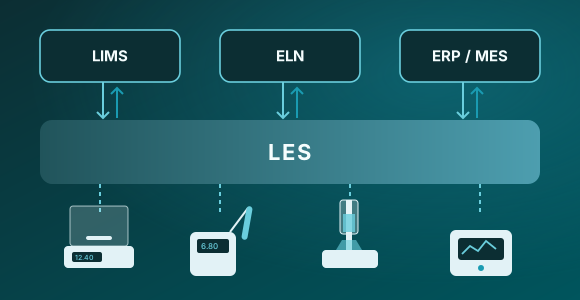
LIMS, ELN and LES often get lumped together, but they do different jobs. A LIMS keeps track of samples and results. An ELN is where scientists write up their experiments. An LES sits at the bench and walks the analyst through the SOP, taking readings straight from the balance or pH meter while the work is being done.
Most QC and GMP labs need a LIMS and an LES. The ELN matters more in R&D.
Why this question keeps coming up
Ask a QC manager what software their lab runs and you’ll usually hear “LIMS”, sometimes “LIMS and an ELN”. Then walk into the lab. Analysts are still weighing samples, writing the result on a printout and typing it into the LIMS later. The SOP is a PDF, or a binder next to the balance.
That gap is where most data integrity findings come from, and where a lot of review time goes. A bigger LIMS won’t close it, because nothing in the LIMS controls how the test is actually carried out.
If you’re new to Lab Execution Systems, start with our guide What is a Lab Execution System (LES)?
LIMS vs ELN vs LES side by side
How the three compare on the points that usually come up when labs are choosing software.
| Criterion | LIMS | ELN | LES |
|---|---|---|---|
| Main question it answers | Where is this sample and what was the result? | What did we try, and what did we learn? | How exactly was this test performed? |
| Who uses it most | Lab managers, QC and QA | Research scientists | Analysts and technicians at the bench |
| Typical lab | QC, contract testing, clinical | Discovery and R&D | QC, process development, GMP manufacturing support |
| What it tracks | Samples, tests, specifications | Experiments, notebook entries | Individual SOP steps and measurements |
| How structured | Highly structured | Mostly free text | Structured, and steps are enforced |
| Instrument data | Final results, often typed in or imported in batches | Attached files and manual entry | Read straight from the instrument into the current step |
| Enforces the SOP | No | No | Yes: order of steps, limits and checks |
| Data integrity (ALCOA+) | Good for results, weak at the point where data is created | Depends on how careful people are | Built in where data is created |
| Best at | Sample tracking, scheduling, reporting, certificates | Flexibility, collaboration, IP records | Consistent execution, fewer errors, audit-ready records |
What each system is good at, and what it can’t do
Keeps track of samples and results
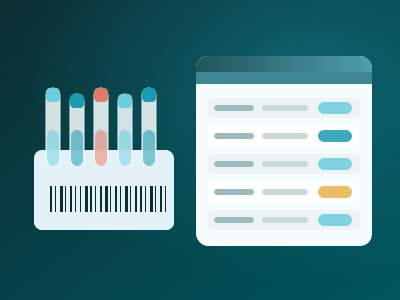
A LIMS registers samples, assigns tests against specifications, tracks their status and produces reports and certificates. Any lab doing routine testing needs one.
What it can’t tell you is how a result was produced. The LIMS knows the pH was 6.8. It doesn’t know whether the meter was calibrated that morning, whether the buffer was in date, or whether someone typed 6.8 when the display said 8.6. In most labs that information is on paper, if it’s recorded at all.

Records experiments
An ELN replaces the paper notebook. Scientists use it to write up what they did, attach data and images, and share results with colleagues. It’s meant to be flexible, because research protocols change all the time.
The catch is that it can’t enforce anything. A free-text entry won’t stop someone from skipping a step or entering a value outside the limit. Labs that run SOPs through ELN templates usually end up with forms that break when the method changes and still depend on manual entry.
Runs the procedure at the bench
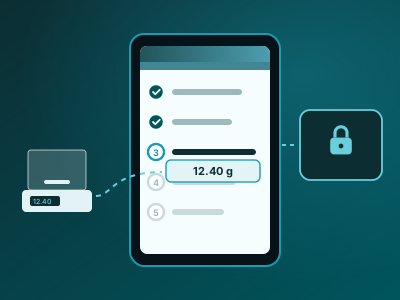
An LES turns the SOP into a step-by-step workflow on a tablet or PC. Readings go straight from the instrument into the right step, calculations run automatically, and the analyst can’t carry on if the balance is overdue for calibration or a reagent has expired.
It isn’t a sample management system or a notebook. It’s designed to work next to your LIMS, and next to an ELN if you have one.
Which combination does your lab need?
A few rules of thumb we use when talking to labs:
- If you run routine tests under GMP, GLP or ISO 17025, you need a LIMS and an LES. With a LIMS alone, the work at the bench goes undocumented.
- If analysts still copy readings from instrument displays or printouts, that’s an execution problem. Upgrading the LIMS won’t change it. Connecting the instruments will.
- If you mostly do early research and protocols change every week, an ELN is probably enough for now. Add an LES once methods settle down and move toward development or QC.
- If you’ve built SOP templates in your ELN, look at how often they lead to errors or rework. That’s usually the clearest sign you’ve outgrown them.
For more on how an LES fits with your other systems, what it does for compliance and what to ask vendors, read What is a Lab Execution System (LES)?
How LabOperator fits in
LabOperator is our LES. Lab experts build SOP workflows without writing code, and analysts follow them step by step at the bench. Instruments connect through LabOperator Connector Boxes or open standards like SiLA 2 and OPC UA LADS, and every step is recorded with a full audit trail and e-signatures. It works with the LIMS and ELN you already run rather than replacing them.
Talk to us about a first workflowSee supported instrumentsRead the LEHVOSS case study
Related guides and articles
Common questions
For general questions about Lab Execution Systems, see the LES guide FAQ.
Can a LIMS replace an LES?
Some LIMS vendors now sell execution modules, so the line is getting blurry. When you look at one, check how many of your instruments it can actually connect to, whether lab staff can change workflows without calling the vendor, and whether it records each step or only the final result.
Does adding an LES mean replacing our LIMS or ELN?
No. The LIMS stays your system of record for samples and results, and the ELN stays where experiments are written up. The LES adds the bench layer and passes results on to them.
Do I need all three?
Not usually. QC and GMP labs typically run a LIMS and an LES. R&D groups rely on an ELN and add an LES once methods become routine. Companies with both research and QC often end up with all three, connected to each other.
Which system should a regulated lab implement first?
Most regulated labs already have a LIMS. If yours does, pick one busy, instrument-heavy workflow such as weighing, pH or titration, put an LES on it and connect it to the LIMS. If you have nothing yet, start with the LIMS and plan the execution layer at the same time.
Can an ELN be used for routine testing in a GMP lab?
It can document GMP work, and plenty of development labs use it that way. For routine testing it tends to fall short. It relies on people typing values in, and it can’t enforce the order of steps, check limits as you go or stop a step when equipment is out of calibration.
How do LIMS, ELN and LES exchange data?
Usually through APIs. In a typical setup the LIMS sends a test order to the LES, the analyst runs the test, and the LES sends the approved results back with all the details attached. In R&D the same data can be linked to an ELN entry. Ask each vendor whether their interfaces are open and documented, and who looks after them.
What does an LES add to a LIMS during an audit?
The LIMS shows the final result. The LES shows how you got there: who did each step, on which instrument, whether it was calibrated, which reagent lot was used and when each value was recorded. Auditors see evidence that was captured while the work was done, not pieced together from paper afterwards.
Can one vendor provide LIMS, ELN and LES?
Some suites cover all three. One vendor can mean simpler contracts and fewer integrations. Specialist systems tend to go deeper in their own area, especially when it comes to connecting instruments. Either way, make sure there are open APIs so you aren’t locked in.
How can I tell whether my lab needs an LES?
Pick one high-volume workflow and measure it for a few weeks: transcription errors, deviations, time spent reviewing records, and time from sample receipt to released result. If a large part of that comes from manual transcription and paper, an LES will make a visible difference.