


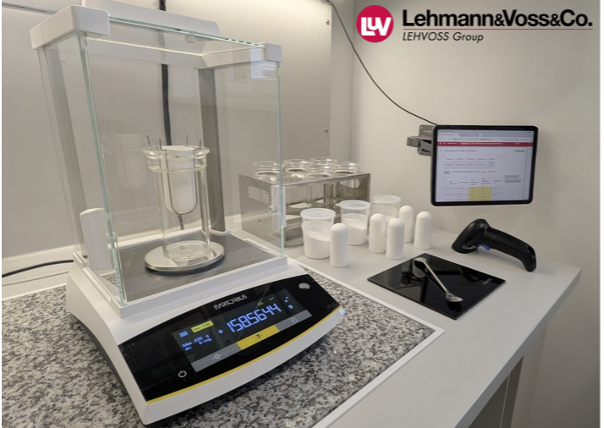
Lehmann & Voss & Co. strengthens quality control
Lehmann & Voss & Co. (LEHVOSS Group), a leading speciality chemicals distributor with more than 125 years of history, set out to modernise its quality control operations while preserving established SAP QM processes.
This case study explores how LEHVOSS transformed its QC workflows by digitising gravimetric testing through guided, step-by-step execution, integrating laboratory operations with SAP QM, and capturing measurement data directly from instruments in an automated and audit-ready format.
The implementation reduced manual effort, improved consistency and strengthened data integrity across daily QC operations, while creating a scalable foundation for future laboratory digitalisation.
Download the full case study to discover how Lehmann & Voss & Co. improved quality control execution while keeping SAP as the system of record.
At a glance
- Customer: Lehmann & Voss & Co. (LEHVOSS Group), speciality chemicals
- Lab area: Quality control laboratory
- Use case: Digital execution of gravimetric tests
- Solution: LabOperator, the Lab Execution System (LES) from LabAthena
- Integrations: SAP QM and laboratory instruments
- Status: Moved from pilot into routine production use
Questions this case study answers
How do you close the gap between SAP QM and the QC lab bench?
SAP QM defines what has to be tested, but test execution often still happens on paper or in spreadsheets. LEHVOSS uses LabOperator to guide analysts step by step, capture results directly from instruments and send them back to SAP QM, so SAP stays the system of record.
Why start with gravimetric testing?
Gravimetric tests are frequent, repetitive and prone to transcription errors. That makes them a practical first use case for QC digitalisation, and the same approach can then be extended to other methods and instruments.
What changes for analysts and QC managers?
Analysts follow guided digital workflows instead of paper instructions, and results reach SAP without manual re-entry. QC managers get consistent execution and audit-ready records. The full case study describes the benefits in detail.
What the case study covers
The case study examines the initial “SAP quality gap” identified by LEHVOSS and why closing it was important for improving laboratory operations.
It explores why LabOperator was selected over other approaches to laboratory digitalisation, how the pilot moved into routine production use, and the operational and compliance benefits achieved.
The case study also outlines the roadmap for scaling workflows, connected devices and SAP integration to support future growth.
Related resources
- What is a Lab Execution System (LES)?
- LIMS, ELN or LES: a decision guide for regulated labs
- 21 CFR Part 11 workflows with LabOperator
- Supported laboratory instruments
Want to see LabOperator in your own QC workflows? Request a demo.
Get the case study
Complete the form to receive “LEHVOSS Strengthens Quality Control Excellence with LabOperator” directly in your inbox.